Messenger Rooms
How 23% of users were getting stuck before a call even started
April 2020. As COVID-19 forced people apart, Rooms went live across Messenger, Instagram, WhatsApp, and Portal — giving hundreds of millions of people a place to gather. Then the data came in.
For every 100 users who tried to join a room, 23 never made it through.
Messenger was asking for camera and microphone access the moment users landed on the page — before they'd seen what Rooms was, before they'd even found the join button.
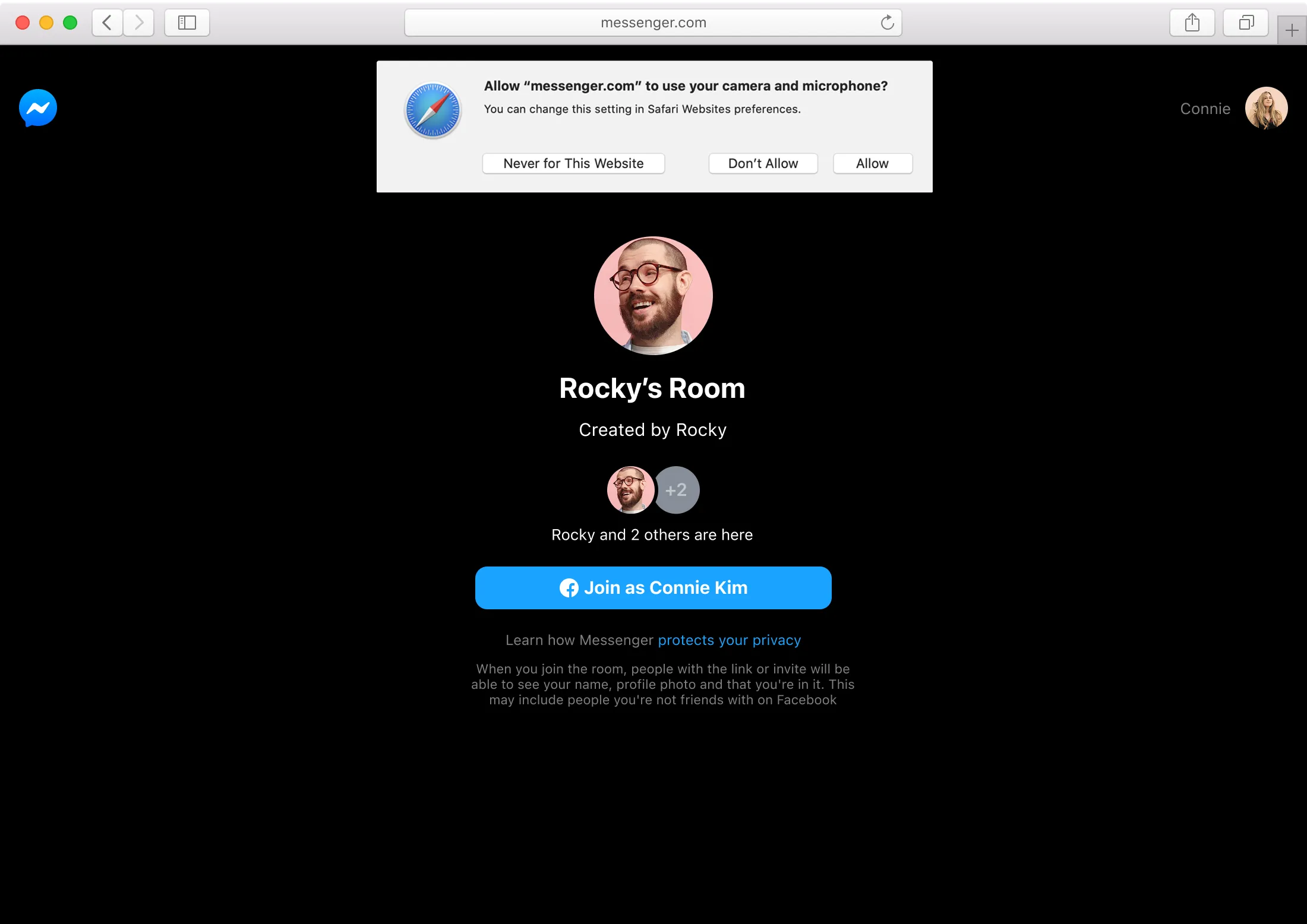
Users were confused — they didn't know why access was being asked for, or how to grant it. Those who had previously denied a permission were stuck.
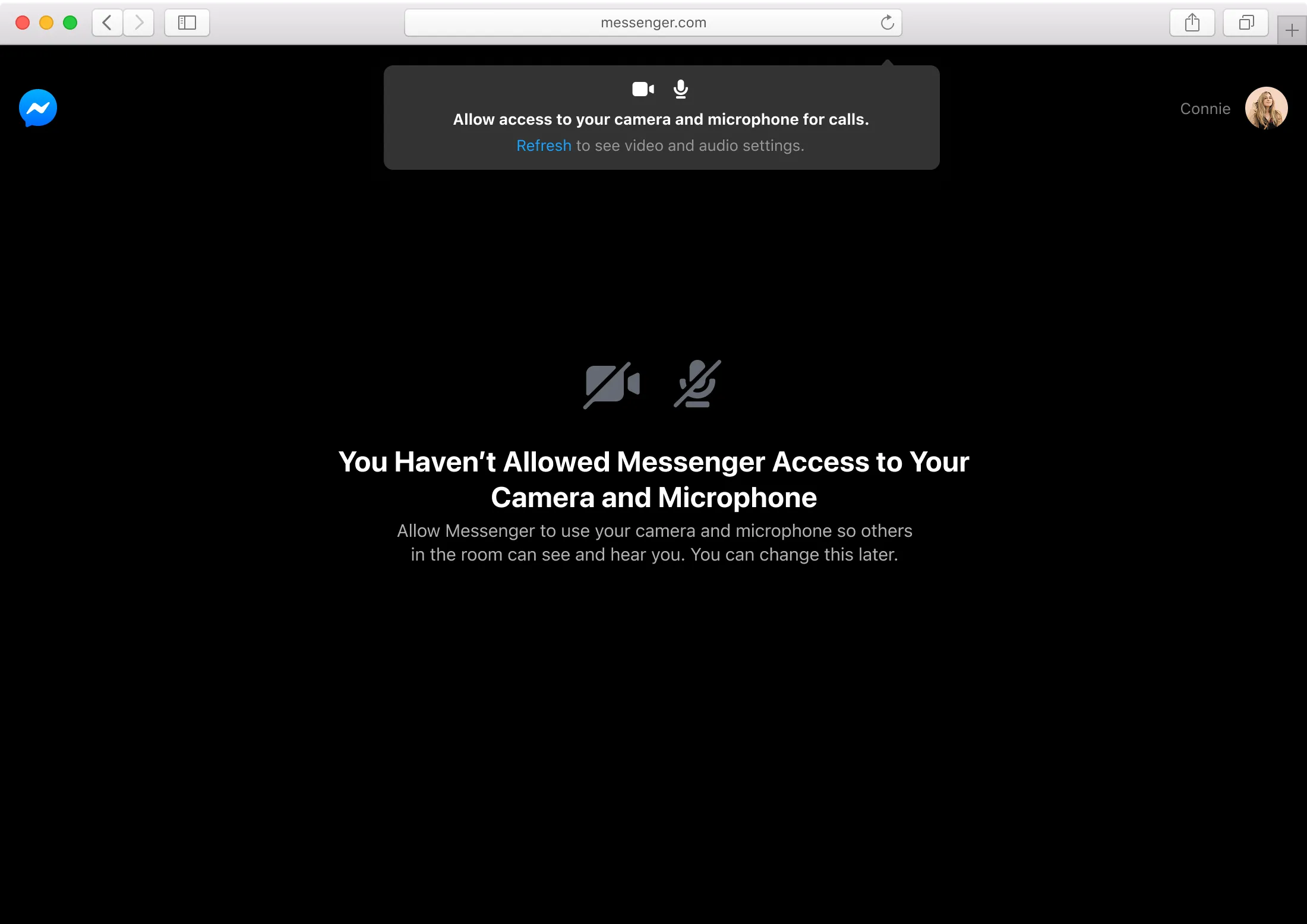
By the time they got through, they were already live. Camera on, microphone on, no preview, no way to check their setup.
A product meant to bring people together was creating a privacy problem before the call had even started.
The fix wasn't a better permission prompt — it was a lobby.
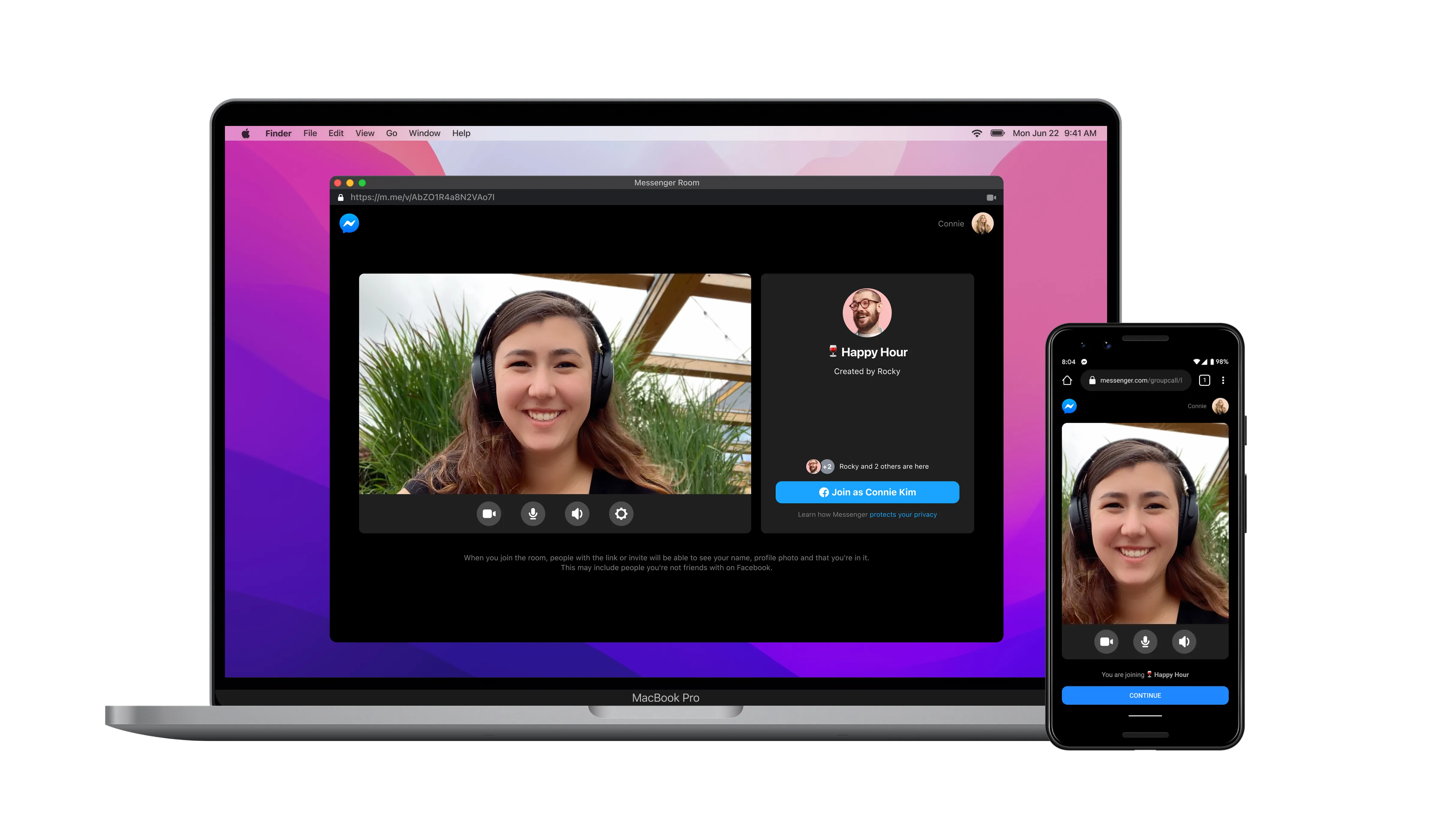
A pre-join screen where users previewed their camera, tested their audio, and chose exactly how they wanted to appear before joining.
Permissions were requested progressively — with a clear explanation of why, and never without a user action.
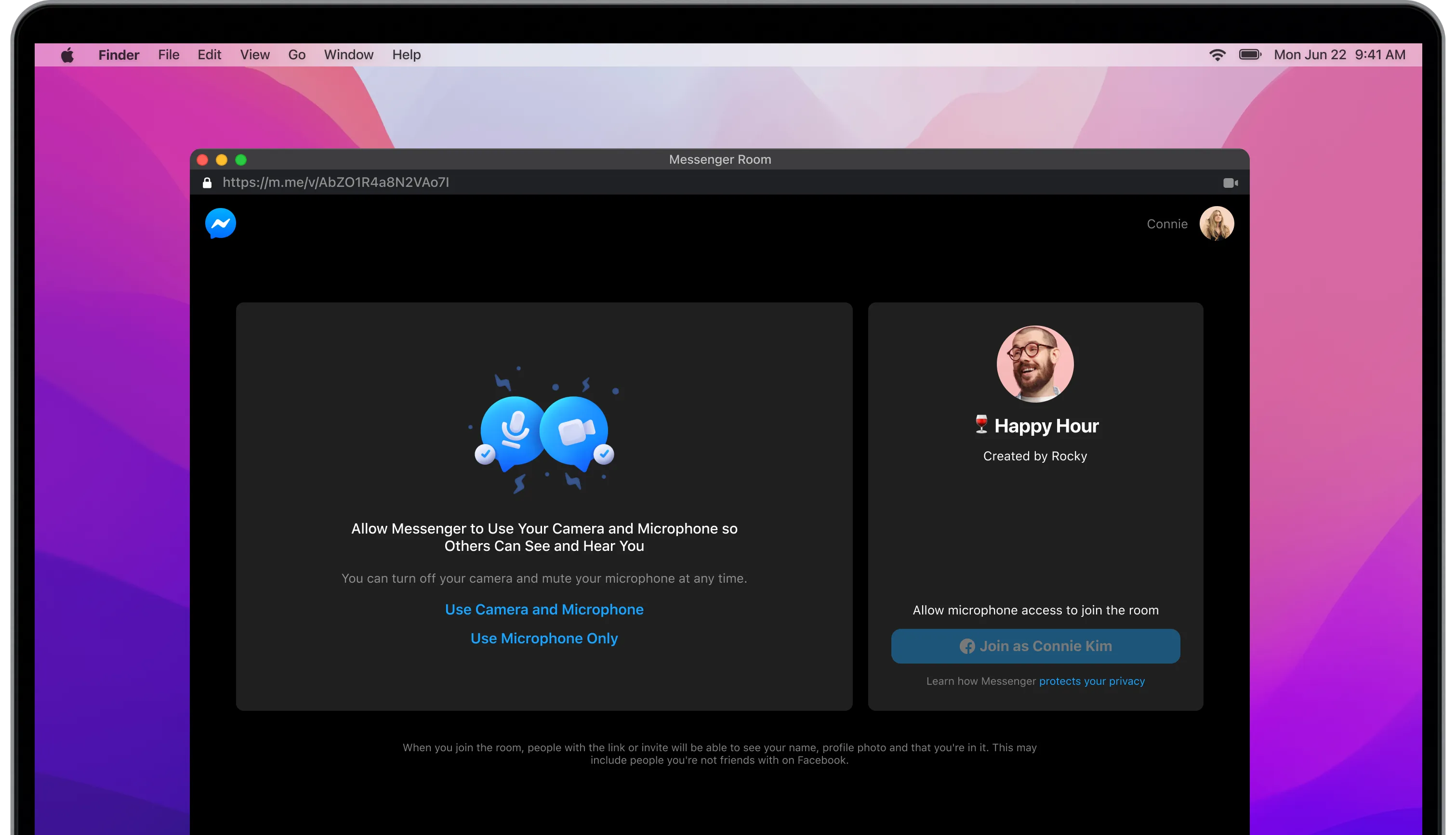
Every browser and OS handles permissions differently — we designed specific guidance and illustrations for each.
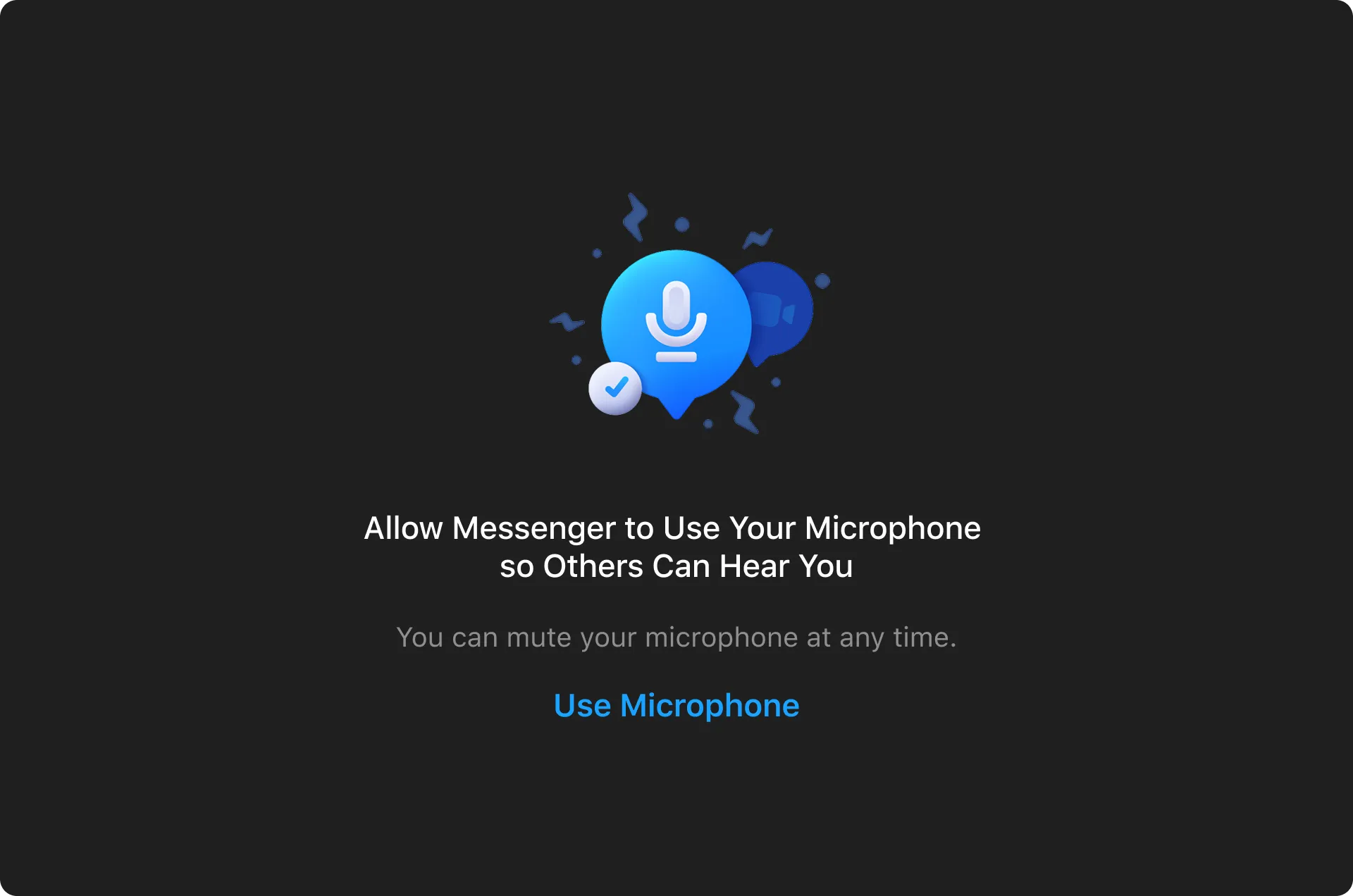
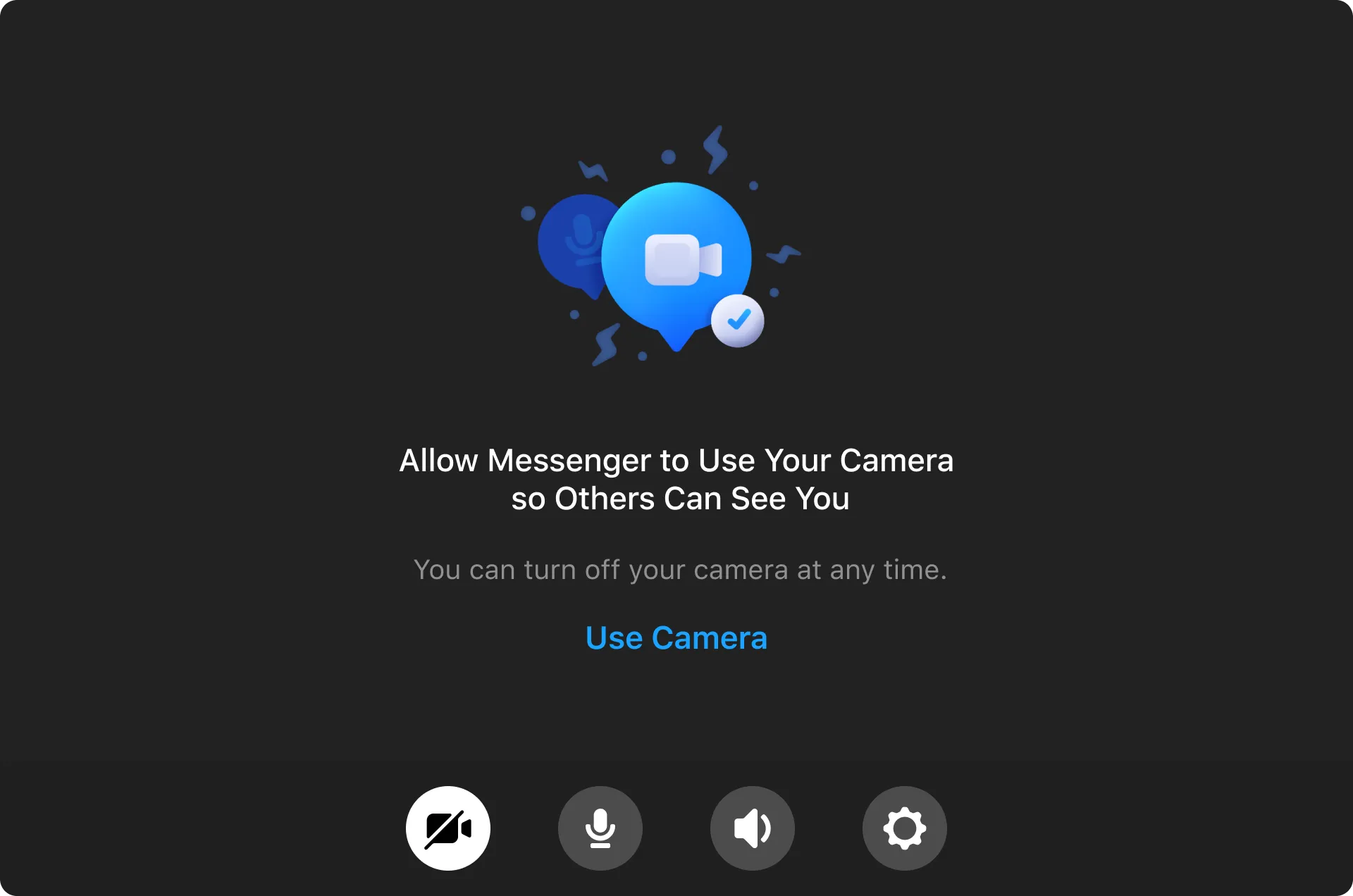
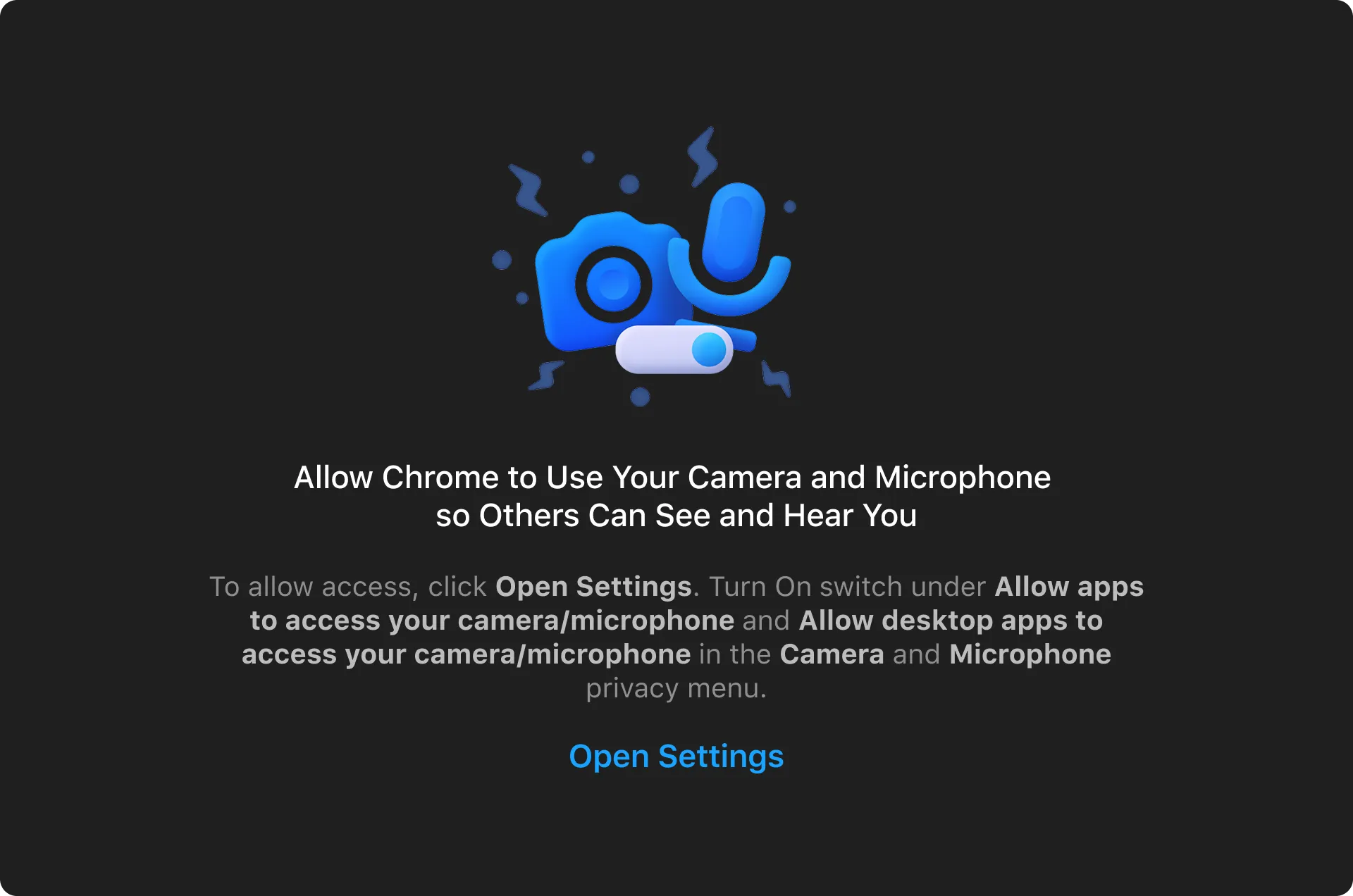
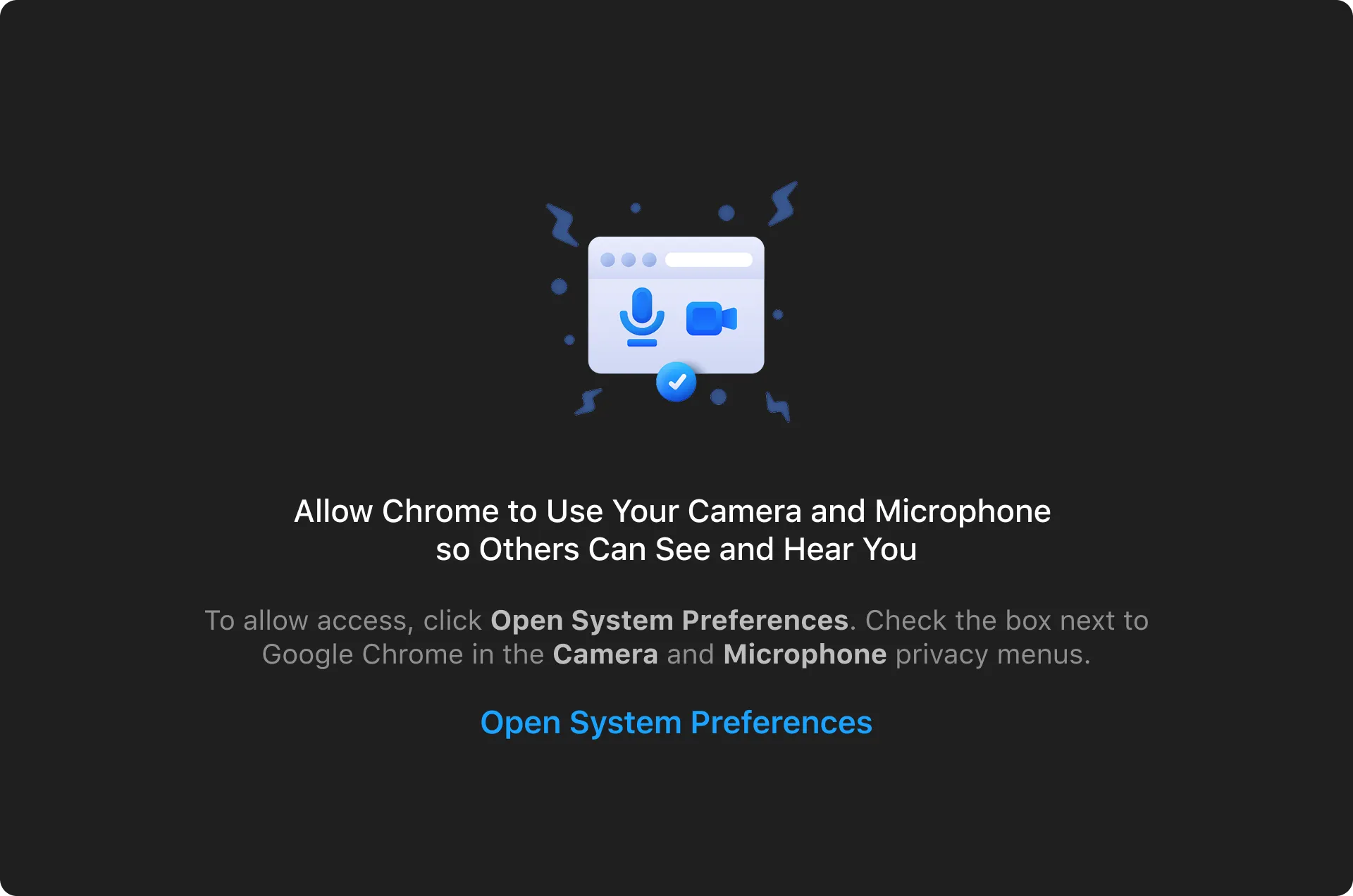
A denied permission was a dead end in the old flow. The lobby surfaced exact recovery steps for each environment, so users could unblock themselves.
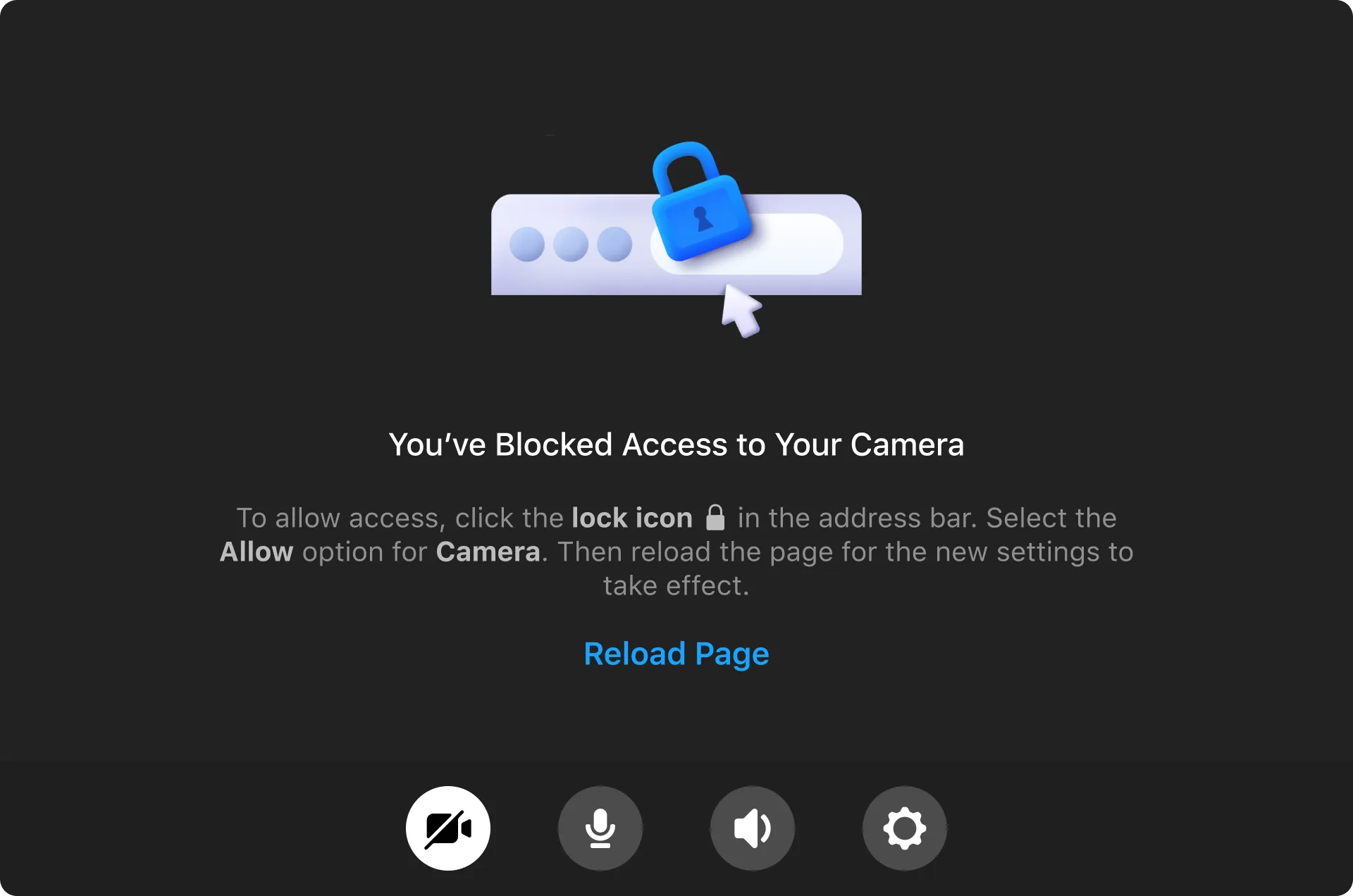
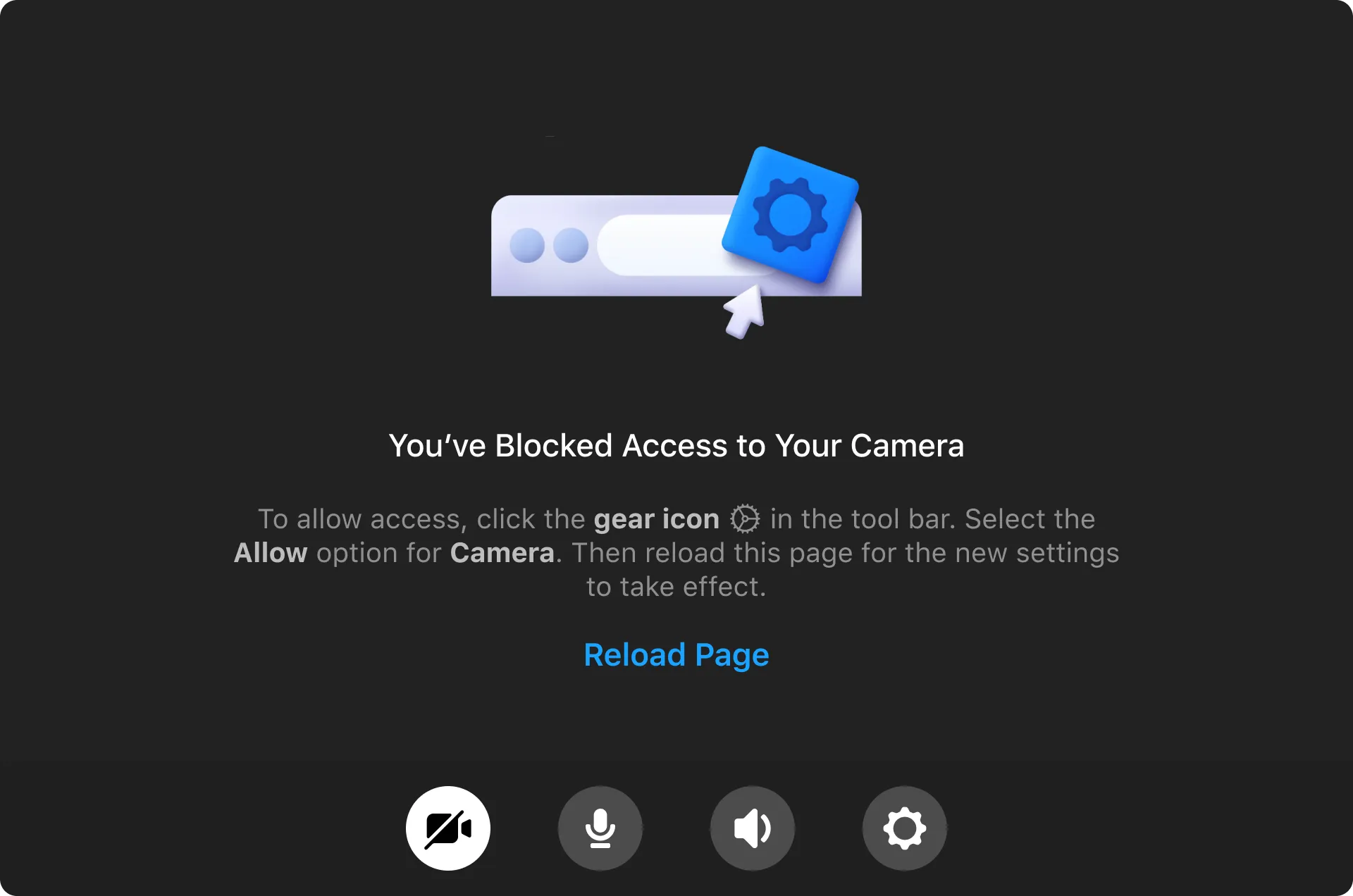
Beyond permission, users had full control — before and during the call — over their camera, microphone, and speakers.
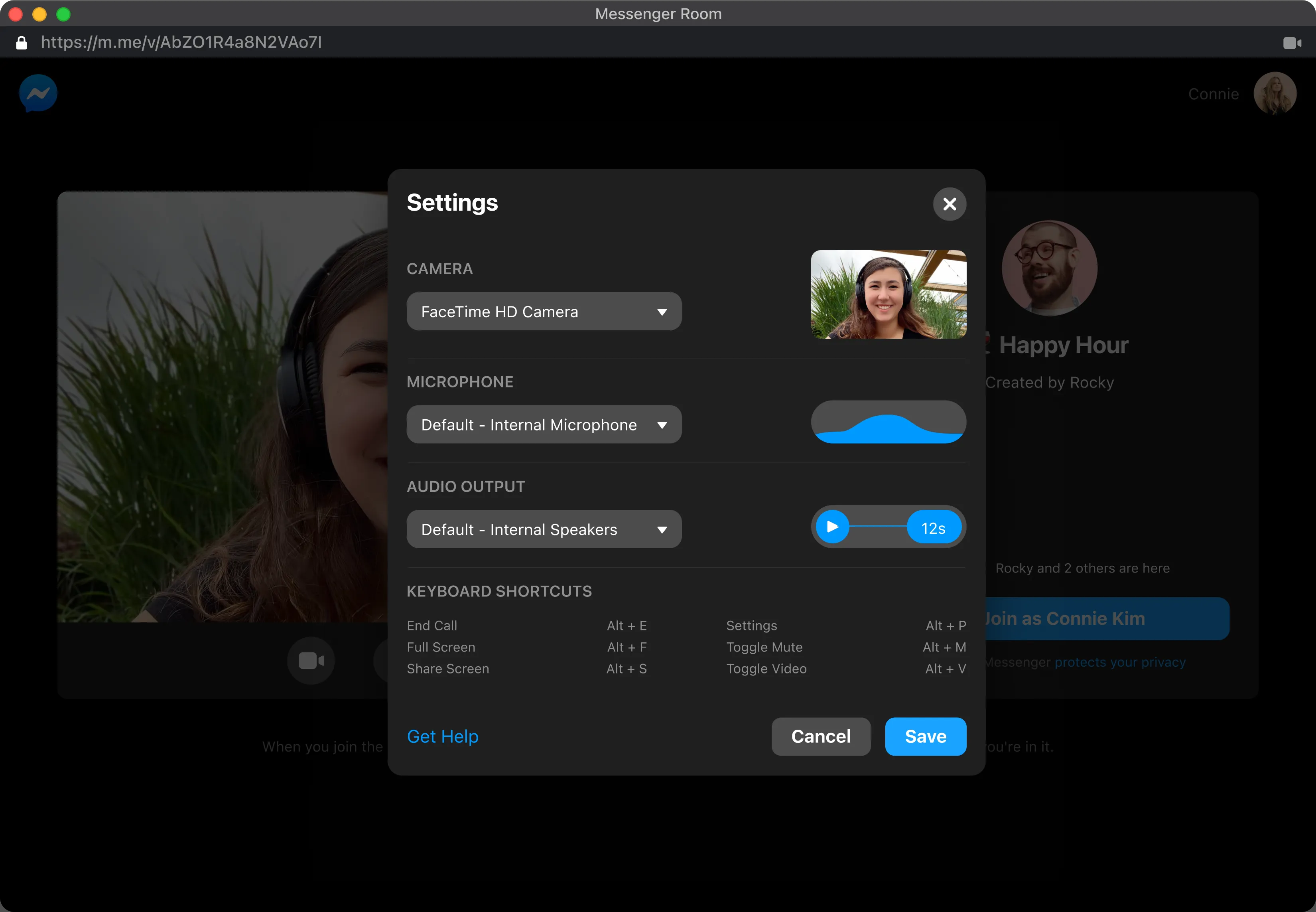
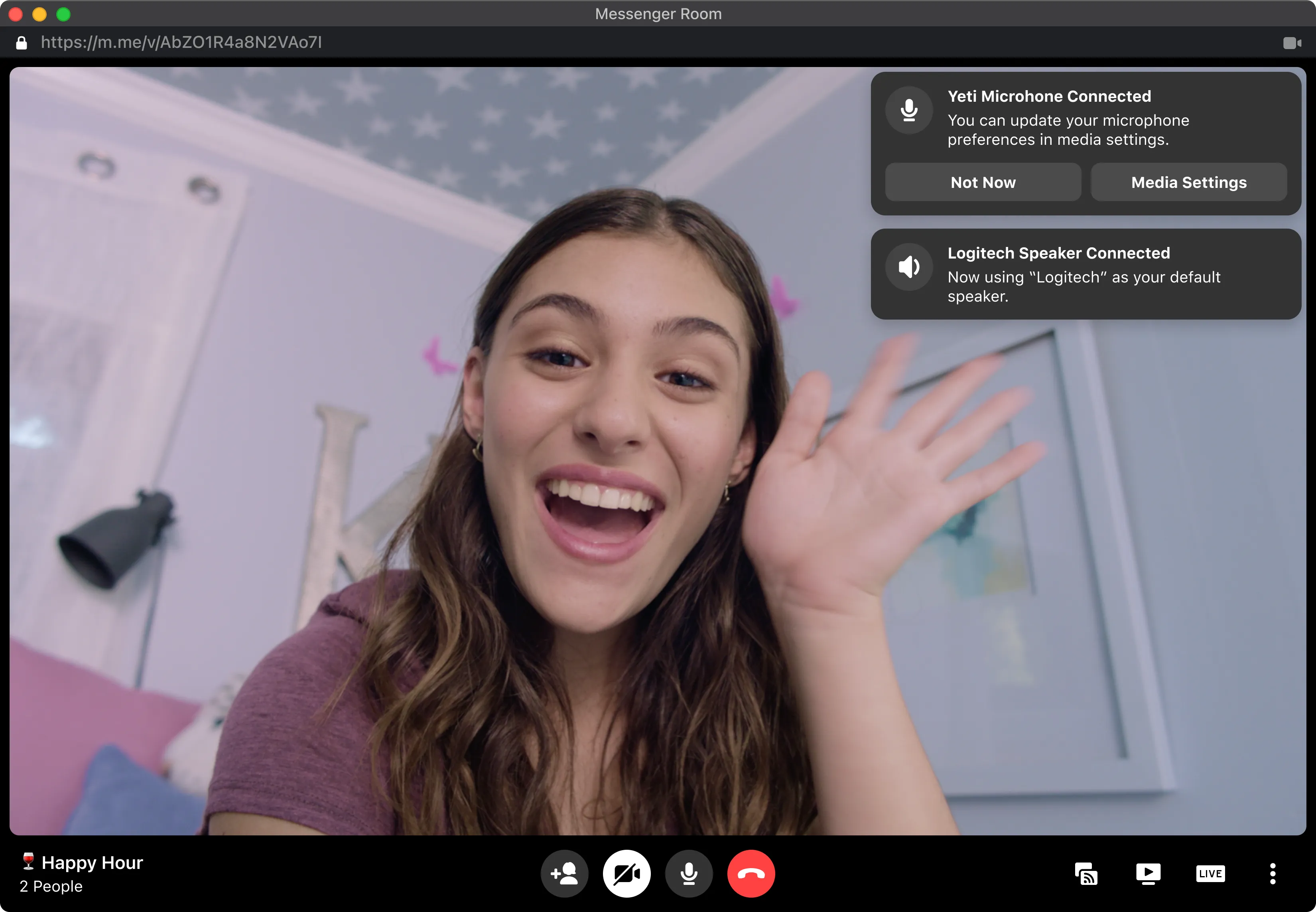
The lobby was fully responsive across browser and screen sizes.
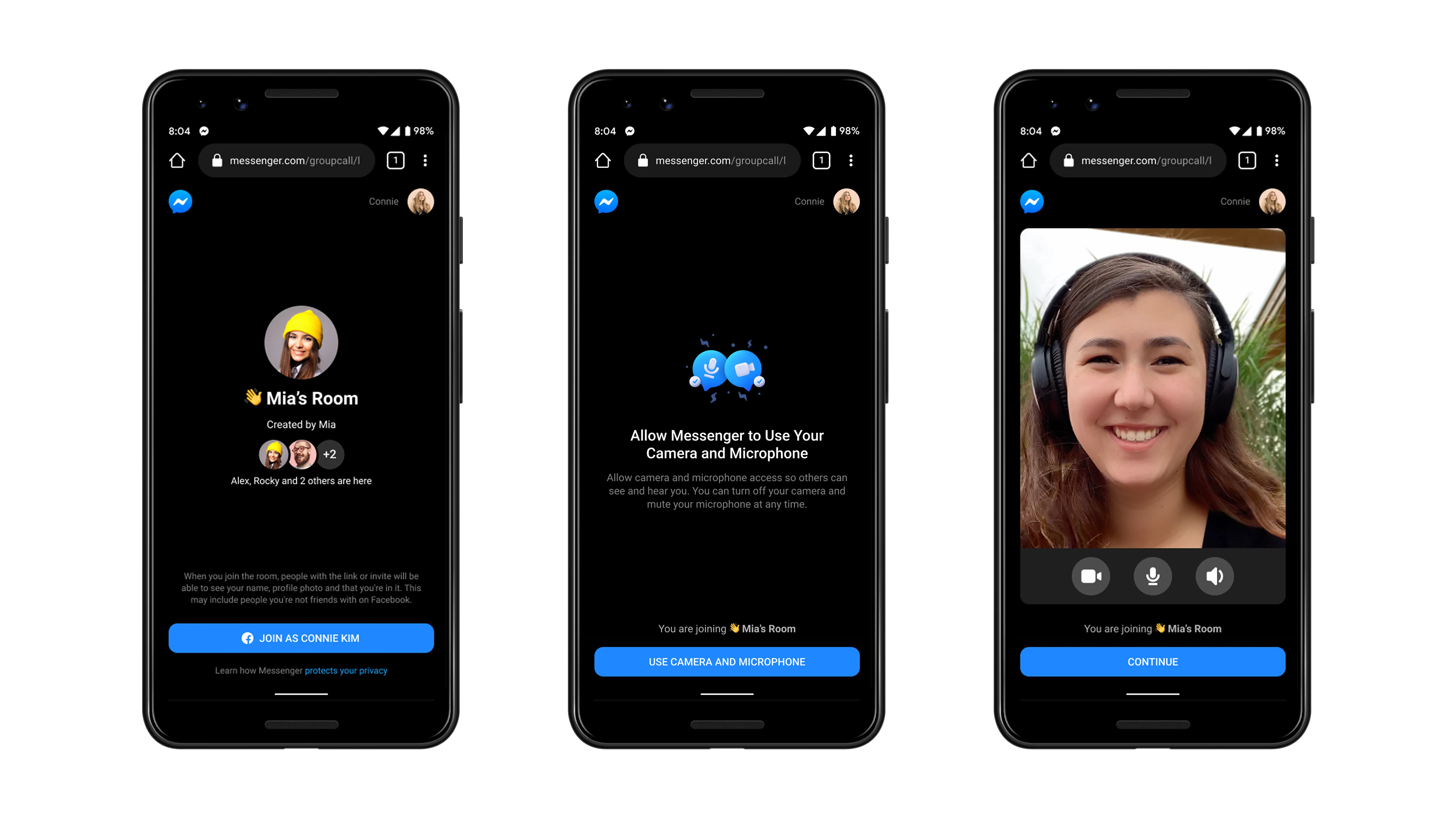
It worked. Joining rate increased from 80% to 91%.
But the bigger impact was what the lobby made possible. The permission model it introduced became the foundation for media and screen share access, in-call privacy controls, and device switching across Rooms.
The lobby shipped across every surface where Rooms existed — Messenger, Instagram, WhatsApp, Workplace, and Portal.